
Home Living on the Lake
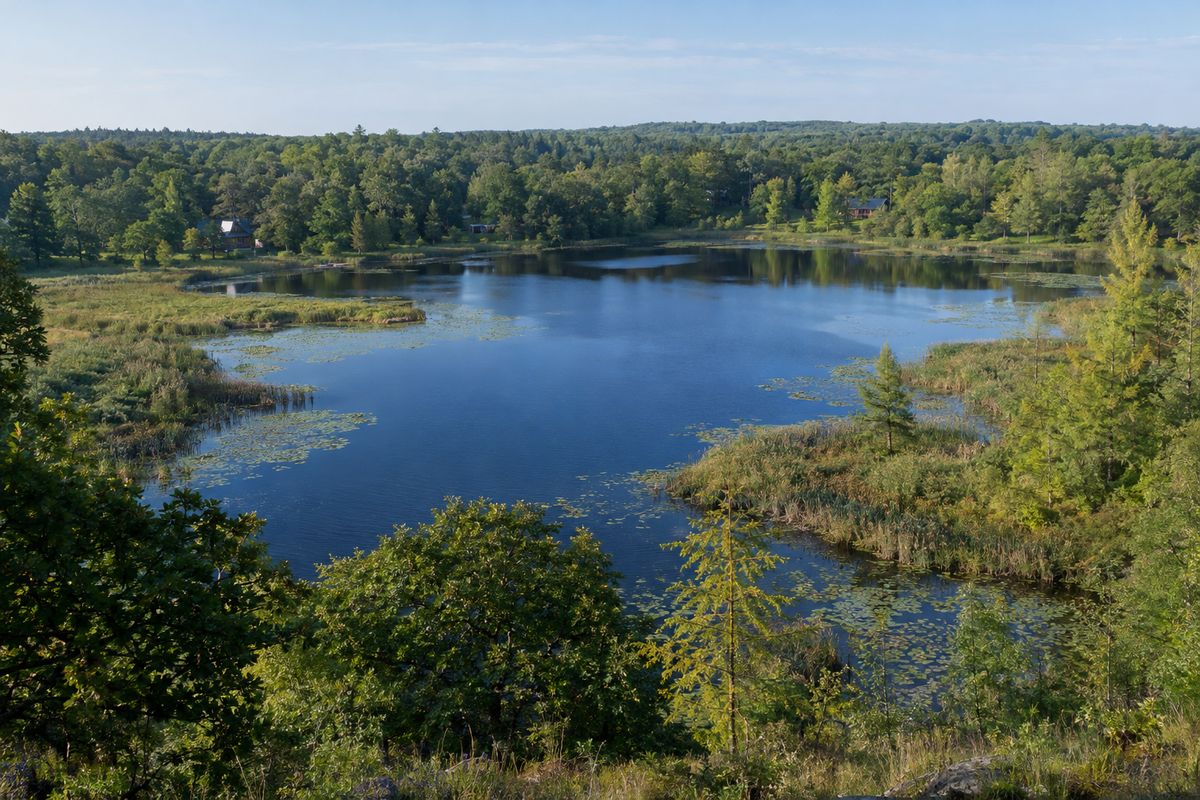
Discover Wild Goose LakeLiving on the lake
Practical information for residents, visitors and anyone who spends time on the water.
Lake Facts
Size, depth, watershed and the fish and wildlife that call the lake home.
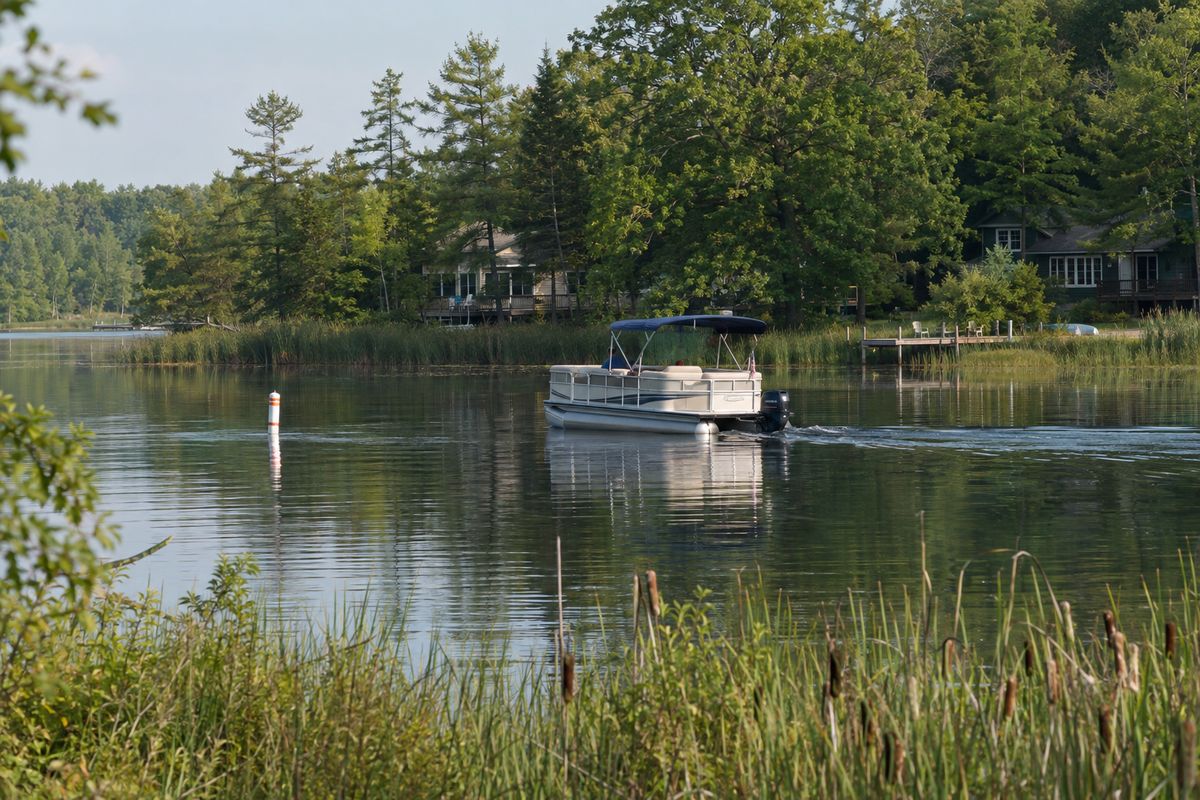
Boating Safety
Speed rules, no-wake hours and how to keep invasive species off your boat.
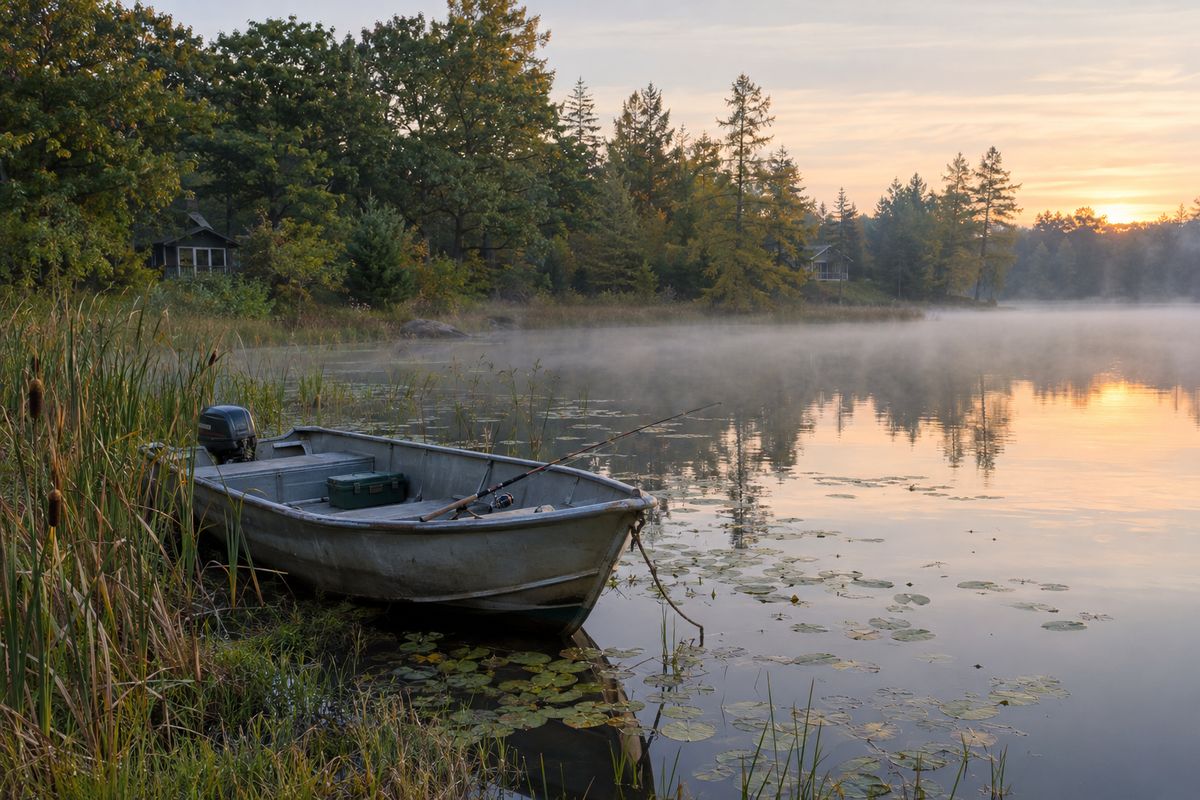
Fishing
What anglers catch here, where to launch and the Michigan rules to know.
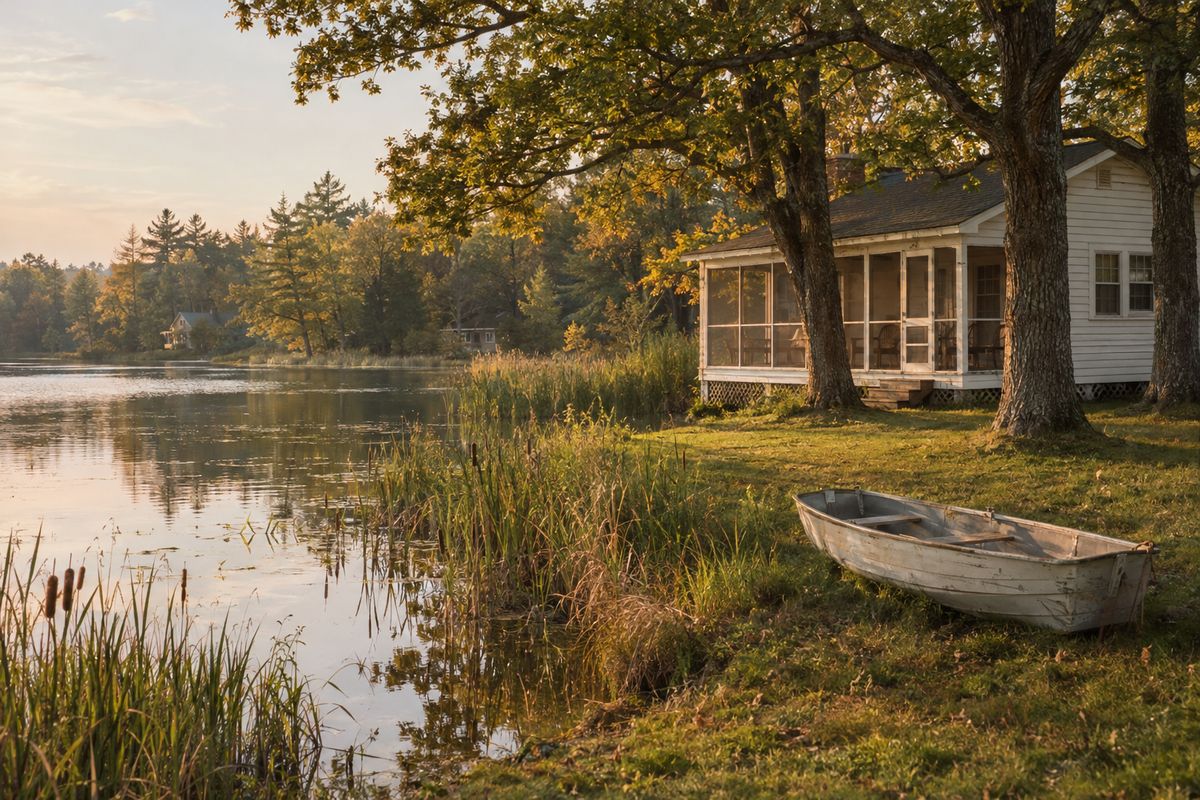
Lake History
How three Black families from Ann Arbor founded the Wild Goose community in 1927.
Wild Goose Lake at a glance
Wild Goose Lake is a small, quiet lake in the hills north of Chelsea, set between Waterloo State Recreation Area and Pinckney Recreation Area.
Each figure notes its source. Sources don't always agree on a lake this small, so we've shown where they differ. We couldn't find average depth or water clarity readings on record; volunteer monitoring can fill that gap.
| Location | Lyndon Township, Washtenaw County, Michigan |
|---|---|
| Nearby | About 5 miles north of Chelsea and just west of North Lake, next to Waterloo State Recreation Area |
| Mailing addresses | Gregory, MI 48137 |
| Surface area | About 40 acres, including shallow, marshy edges, per the Michigan DNR lake inventory. Newer USGS mapping counts only the open water, about 14 acres. |
| Maximum depth | 18 feet, in the eastern part of the lake, per the Michigan DNR lake contour map. An older DNR table lists 15 feet. |
| Shoreline | About 1.6 miles (DNR lake map) |
| Elevation | About 928 feet above sea level (USGS) |
| Lake type | Small, natural warm-water lake with no mapped stream inlet or outlet |
| Watershed | Huron River (Portage Creek area) |
| Fish | Largemouth bass and black crappie reported by anglers. See Fishing |
| Wildlife | Sandhill cranes nest and feed around the lake. See Sandhill Cranes |
| Public access |
A lake community since 1927
Wild Goose was founded by Black families who wanted a lake of their own, at a time when many resorts nearby turned them away.
In 1927, three Black families from Ann Arbor, the Bakers, the Grayers and the Popes, bought the 250-acre Schultz farm around Wild Goose Lake. The sale closed on June 1, 1927. Charles Baker, co-owner of the Ann Arbor Foundry, organized the purchase with Donald Grayer and Iva Pope, and together they founded the Wild Goose Country Club.
Not every neighbor welcomed them. Some circulated a petition urging the owners not to sell, but the sale went through, and local grocer Perry Noah refused to sign it.
The club laid out 93 cottage lots, a shared stretch of shoreline with a fishing dock, a nine-hole golf course and a dance hall on the hill. The old farmhouse became the clubhouse. The first cottages were log cabins built from Sears, Roebuck kits, and lots sold for $100.
The Depression slowed building, a storm in the 1930s knocked down the dance hall, and the golf course has long since grown over. Old apple, pear and cherry trees from the farm's orchard outlasted them all, and a descendant of the Baker family still lives on the lake today.
Read the full story: “A Tale of Two Lakes” by Grace Shackman, in the Ann Arbor District Library's Observer archive, tells the history of Wild Goose and its neighbor Inverness on North Lake.
Sources: Grace Shackman, “A Tale of Two Lakes,” Community Observer, Fall 2004; WEMU, February 2026.
Fishing Wild Goose Lake
Fishing has been part of life here since the club built its dock on the shared shoreline in the 1920s. Much of the lake is shallow, with a deep hole of about 18 feet toward the east end.
The state has never stocked or surveyed Wild Goose Lake, so there's no official species list yet. Tell us what you catch and we'll keep a record.
What anglers report: largemouth bass and black crappie.
Getting on the water:
Licenses: Anyone 17 or older needs a Michigan fishing license. In 2026 a resident annual license is $26, or $11 for residents 65 and older.
Statewide rules (2026): Bass are catch-and-release until the Saturday before Memorial Day, then may be kept through December 31 at 14 inches or longer, up to 5 a day. Bluegill, crappie and other sunfish are open all year with no minimum size and a limit of 25 a day combined. Northern pike may be kept from the last Saturday in April through March 15 at 24 inches or longer, 2 a day.
Rules change each April. Check the Michigan DNR fishing regulations before you go.
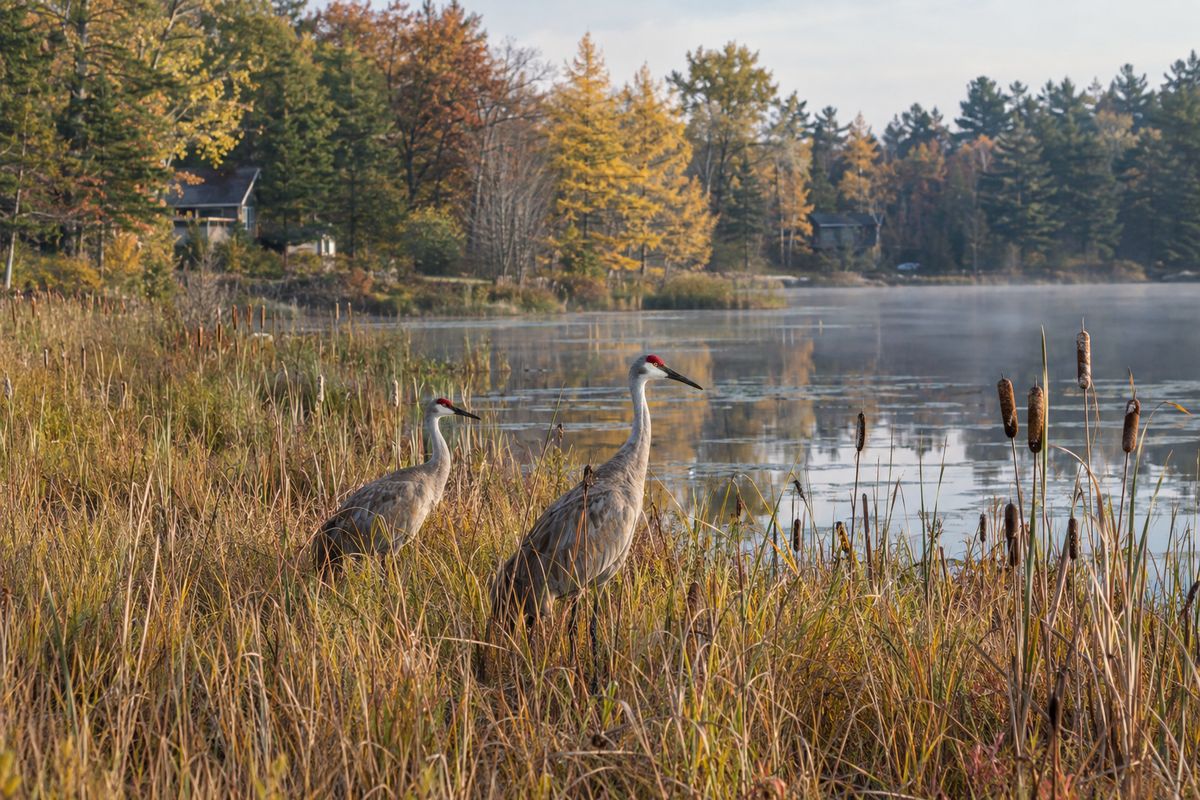
Sandhill cranes
Sandhill cranes nest and feed around Wild Goose Lake, and their rolling, trumpeting calls are part of life on the lake. Here are a few things worth knowing about our long-legged neighbors.
Tall, gray and red-capped
A sandhill crane stands about 4 feet tall with a wingspan of about 6.5 feet. The red cap is bare skin, not feathers, and it turns a deeper red when the bird is excited.
Calls that carry
You can hear a crane up to 2.5 miles away. Its windpipe is so long that it coils inside the breastbone like a trumpet, which deepens the call and adds rich overtones.
Partners for life
Cranes mate for life, often for 20 years or more, and pairs stay together all year. Mated pairs sing a duet called the unison call, with the female answering two notes for each of the male's.
They dance
Cranes bow, pump their heads, spread their wings and spring into the air. Males and females both dance, to win a mate and to strengthen a bond they already have.
Mud makeup
In spring, cranes rub iron-rich mud into their gray feathers with their bills, staining them rusty brown. No one knows for sure why, but the leading idea is camouflage on the nest.
Colts on the move
Baby cranes are called colts. Within 8 hours of hatching they can leave the nest and even swim after their parents. They fly at about 10 weeks and stay with the family for 9 to 10 months.
An ancient bird
The oldest known sandhill crane fossil, found in Florida, is about 2.5 million years old. The oldest wild crane on record lived at least 37 years.
A Michigan comeback
Lost wetlands and market hunting left only 27 pairs in the Lower Peninsula by 1944. Under federal protection they rebounded to an estimated 24,000 cranes statewide by 2013.
Where to see thousands
Each fall, cranes gather near Waterloo to rest and feed before flying south. The best place to watch is Michigan Audubon's Haehnle Sanctuary, about 1,000 acres on the western edge of Waterloo Recreation Area in Jackson County. In the late afternoon, flocks drop into Mud Lake Marsh to roost. Late October through November is usually the peak. The sanctuary is free and open dawn to dusk.
Counters there tallied a record 8,177 cranes on November 19, 2012. Some cranes stay for the winter, too: the 2023–24 Waterloo Christmas Bird Count found 3,507, the most of any count in Michigan that year.
Living alongside cranes
Never feed them. Cranes that get handouts learn to raid bird feeders and peck at windows, and it brings them close to dogs, raccoons and foxes. If cranes keep visiting your feeder, take it down for a few days.
Give families room. Parents walking with colts often won't fly away, so slow down and let them cross roads and lawns at their own pace.
They're protected. Sandhill cranes are covered by federal migratory bird law, and Michigan has no crane hunting season.
Sources: Cornell Lab of Ornithology, All About Birds; Michigan DNR, sandhill crane viewing and its 2016 Migratory Bird Treaty centennial bulletin; Michigan Audubon; Jackson Audubon Society; U.S. Fish and Wildlife Service; National Audubon Society Christmas Bird Count.
Waterfowl hunting near the lake
Glaciers left the country around Wild Goose Lake dotted with kettle lakes, marshes and farm fields, and the state land at Waterloo and Pinckney alone holds dozens of lakes, ponds and wetlands. That mix of open water, cover and food draws ducks and geese, and Michigan sits in the Mississippi Flyway, one of North America's four waterfowl flyways.
Canada geese nest in every Michigan county and are most common in the southern third of the state, so the DNR adds early September and late-winter goose seasons aimed at these year-round residents.
On Wild Goose Lake itself: The shoreline is almost all private, and Michigan law bars hunting with a firearm within 450 feet of an occupied home or farm building without the owner's or occupant's written permission. The law makes no exception for hunting from the water.
Goose Lake State Game Area
About 202 acres of marsh, open water, fields and woods surrounding Goose Lake in Sylvan Township, southwest of Chelsea. It's a different lake from ours, about 11 miles away as the crow flies. The DNR manages it first of all to raise waterfowl, with mallards and wood ducks among its featured species, and waterfowl and deer hunters use it most. Parking and a half-mile walking trail are on Rank Road, about 4 miles south of the Kalmbach Road exit on I-94. There's no boat launch.
DNR area map · DNR management plan
Other public land close by
Waterloo Recreation Area, which reaches into Lyndon Township, and Pinckney Recreation Area allow hunting in most places outside posted safety zones, though parts of Waterloo are closed to waterfowl hunting Sept. 1–15. A Recreation Passport is required for vehicles. Unadilla State Wildlife Area (about 1,160 acres of marsh and lakes, northwest of us), Chelsea State Game Area (about 800 acres, east of Chelsea) and Gregory State Game Area (about 2,700 acres, to the north) are also open to hunting. The DNR's Mi-HUNT map shows exact boundaries.
2026–27 seasons (South Zone)
| Ducks, mergansers and coots | Oct. 17 – Dec. 13 and Dec. 26–27. Up to 6 ducks a day, with no more than 4 mallards (only 2 of them hens) and 3 wood ducks. Some other species have their own limits. |
|---|---|
| Canada and other dark geese | Sept. 1–30, Oct. 17 – Dec. 13, Dec. 26 – Jan. 3 and Feb. 6–15. Up to 5 a day. |
| Youth waterfowl weekend | Sept. 19–20 |
| Shooting hours | A half hour before sunrise until sunset |
What you'll need
Licenses: A Michigan base license, a Michigan waterfowl license (which includes federal HIP registration) and, at 16 or older, a federal duck stamp. Anyone born on or after January 1, 1960 needs a hunter education certificate, or can start on an apprentice license with a licensed mentor.
Gear: Non-toxic shot only, such as steel. Hunter orange isn't required for waterfowl.
Boats: Shut off the motor and let the boat stop before you shoot, and keep guns unloaded while under power.
Private land: Always get the landowner's permission first.
Seasons and limits change every year. Check the DNR's 2026 waterfowl regulations before you go.
Boating safety and courtesy
A busy summer weekend works best when everyone follows the same rules. The Michigan DNR's list of special local watercraft rules for Washtenaw County does not include Wild Goose Lake, so state boating law applies here. These are some of the rules that matter most on a small lake; the DNR's boating rules have the full list.
Boater safety certificate
Anyone born on or after July 1, 1996, needs a Michigan boating safety certificate to run a motorboat over 6 horsepower, and most personal watercraft (jet ski) operators born after December 31, 1978, need one too. You can earn it in a classroom or through the DNR-approved online course, and it is good for life. Children have their own limits; see the DNR's age rules.
Life jackets: Every boat needs a Coast Guard-approved life jacket for each person aboard or being towed, plus a throwable ring or cushion on boats 16 feet or longer. Children under 6 must wear one on an open deck. Anyone on a jet ski or being towed must wear one, and inflatables don't count for them. DNR life jacket rules
Jet ski hours: No personal watercraft from sunset until 8 a.m.
Jet ski distances: Stay at least 100 feet from docks, rafts, swimming areas, people in the water and boats at anchor or drifting, unless you are at slow-no-wake speed.
Towing: No skiing or tubing from one hour after sunset to one hour before sunrise.
Near shore: Slow-no-wake within 100 feet of the shoreline where the water is less than 3 feet deep.
Travel direction: By custom, boats travel counterclockwise around the lake.
Clean, drain, dry: Remove plants and mud, drain all water, and let your boat dry before moving between lakes. This is the single best way to stop invasive species.
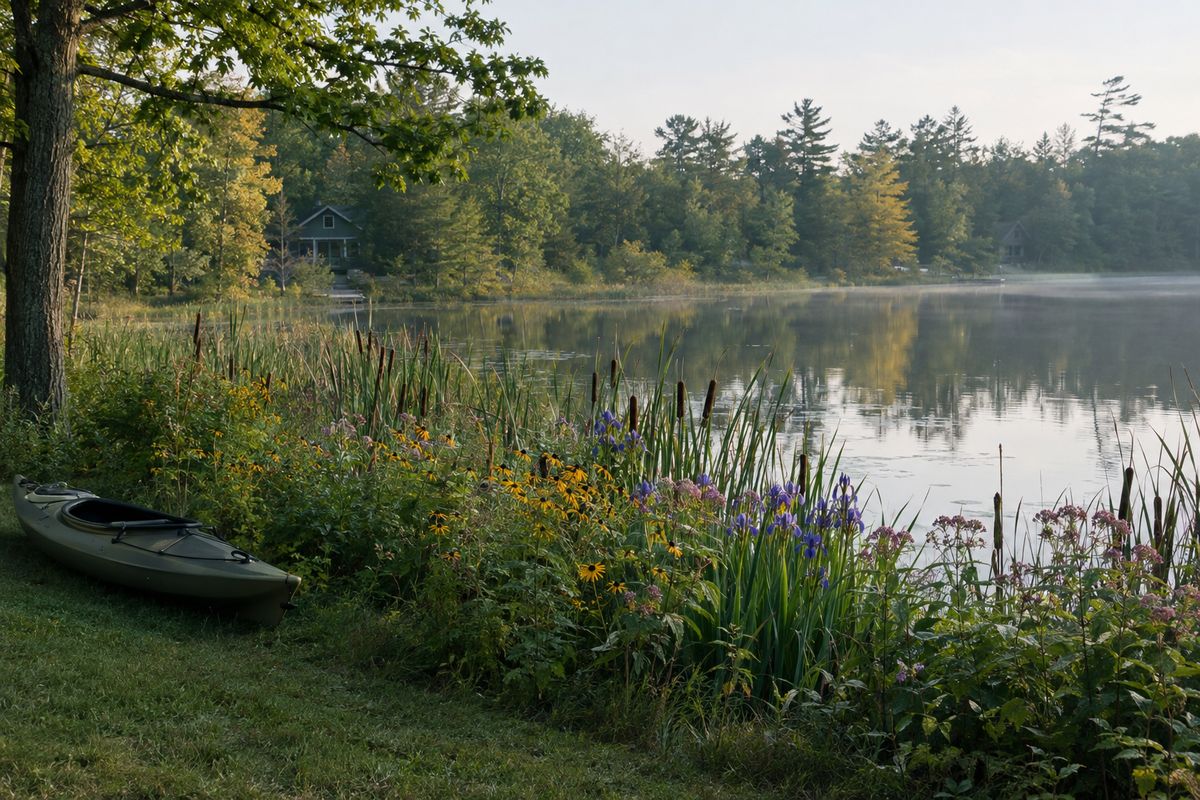
Lake-friendly living
Most of what reaches the lake starts on the land around it. A few habits on every property add up to clearer water and fewer weeds.
Keep a natural shoreline
A strip of native plants along the water filters runoff, holds the bank in place and gives fish and birds cover. The Michigan Natural Shoreline Partnership has guides and certified contractors.
Go easy on fertilizer
Phosphorus feeds algae and weeds. Skip fertilizer near the water, or choose phosphorus-free, and keep grass clippings and leaves out of the lake.
Don't feed the waterfowl
Feeding geese and ducks draws large flocks, adds nutrients and bacteria to the water near shore and teaches birds to depend on people.
Care for your septic system
A failing septic system leaks nutrients into the lake. Have it inspected and pumped on schedule; the County's water pages have guidance.